


Livecasino Casino Blog
Baccarat
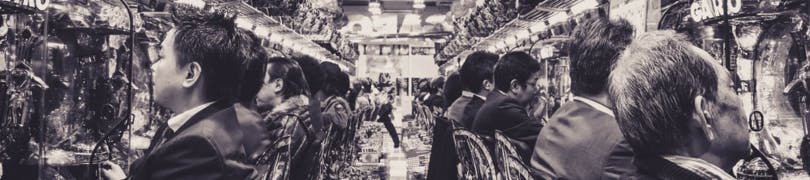


Although unknown outside Japan, Pachinko is an incredibly popular pastime for the Japanese. It’s described as part-arcade & part-casino, and part-pinball & part-slot machine. It takes elements from all of them and transforms them into a uniquely Japanese game with rich cultural roots.
It was made in the early 20th century to give foreign, mostly Korean, workers a job safe from discrimination. Today, Pachinko has a player base consisting of people from all walks of life. At least 1 out of 11 Japanese play at Pachinko parlours every week. However, although Pachinko is widely accepted, it still holds a stigma because of the social milieu and conditions when it was made.
A Brief History of Japanese Pachinko
Pachinko started in the 1920s. This was when Bagatelle Pinball came to Japan. Back then, it was known as ‘pachi pachi’ because of the noise the steel balls made. It wasn’t until World War 2 ended that it became a widespread phenomenon.
After WW2, several Korean-Japanese people were unemployed because of discrimination. It was difficult to enter a traditional workforce and they had to find other ways to work.
Thus, the first Pachinko parlours were made. They were normally controlled by the Yakuza who handled the conversion from prizes to cash.
In modern-day Japan, most forms of gambling are still considered illegal except for horse race and auto race betting. However, Pachinko continues to exist because of a loophole in the legal system.
This loophole involves the exchange of prizes to cash. In parlours, there are no cash prizes because they’re illegal. Instead, prizes are purses, notebooks, and many more. To avoid hoarding these prizes, there’s a designated money converter in a separate location from the Pachinko parlour. At the converter counter, prizes can be turned in and rewarded with cash.

What to Expect at a Pachinko Parlour
Japanese Pachinko is played at Pachinko parlours around Japan. They’re easy to spot because of their enormous neon signs and bright lights.
Parlour interiors are easily recognizable because of the sheer number of Pachinko machines inside that are organized for maximum capacity. Because of this, the walkways are tight and the noise is deafening.
Today, there are over 12.5k Pachinko parlours in Japan. Most, if not all of them, are run by Korean-Japanese workers. There is still a stigma around Pachinko despite its popularity and the Japanese refuse to work at these parlours.
In fact, Pachinko’s so popular that parlours earn a profit of 30 trillion yen a year. This is 4% of Japan’s total GDP. This profit gain is why the government allows it to continue. With this much profit, Pachinko parlours earn more than Macau and Las Vegas casinos combined. Making the most of Pachinko’s popularity is Dynam, one of Japan’s biggest game operators with over 400 parlours.
How to Play Pachinko
Playing Pachinko is easy. Use a card to exchange your cash for steel balls. These bead-sized steel balls traditionally cost 4 yen each.
Place your balls on the tray and swing the lever at the side. This launches the balls into the machine and causes them to cascade into the machine’s bank or a special hole. The winning conditions change from machine to machine. Some even have special minigames or jackpots.
When enough balls land in the winning holes, more steel balls come out as your prize. You can collect them or use them to keep playing.
The prize counter changes from parlour to parlour. There, you can exchange your balls for a ticket or prizes. The ticket is only available where a ball counter exists. The ball counter counts your balls for you and prints out a ticket with your total.
If you have the ticket or don’t want to keep the prizes, find the designated converter. You aren’t allowed to ask for directions and must find it yourself. This is because revealing the location of the converter is incredibly dangerous and can potentially jeopardize the business if revealed to the wrong people. At the converter, your ticket and prizes can be exchanged for cash.
Other Facts About Pachinko
Pachinko is well-known as an addictive game and so regulations were placed so that players can’t win over €410 within 4 hours.
There are fewer Pachinko parlours now than in 2005 but Japanese Pachinko is still incredibly popular. Pachinko parlour managers have also begun to modernize. One of the ways they do this is by lowering the cost of each steel ball from 4 yen to 1 yen. This maximizes the essence of the gameplay and not the gambling.
Time to Pull the Pachinko Lever
Pachinko is deeply embedded in Japanese culture and there’s no harm giving it a try on your next trip to Japan. It can be a part of your bucket list. It’s incredibly fun and simple to play on any Pachinko machine. It doesn’t matter if it’s electronic or traditional.
With Pachinko, you can get a taste of the true Japanese experience and have fun doing it. As Pachinko parlours modernize and attract younger players, it won’t be long until online Pachinko games also begin to emerge.
Seek jackpots and wins in the classics to themed games here!
No need to wait long to register. Sign up only takes 10 seconds!


